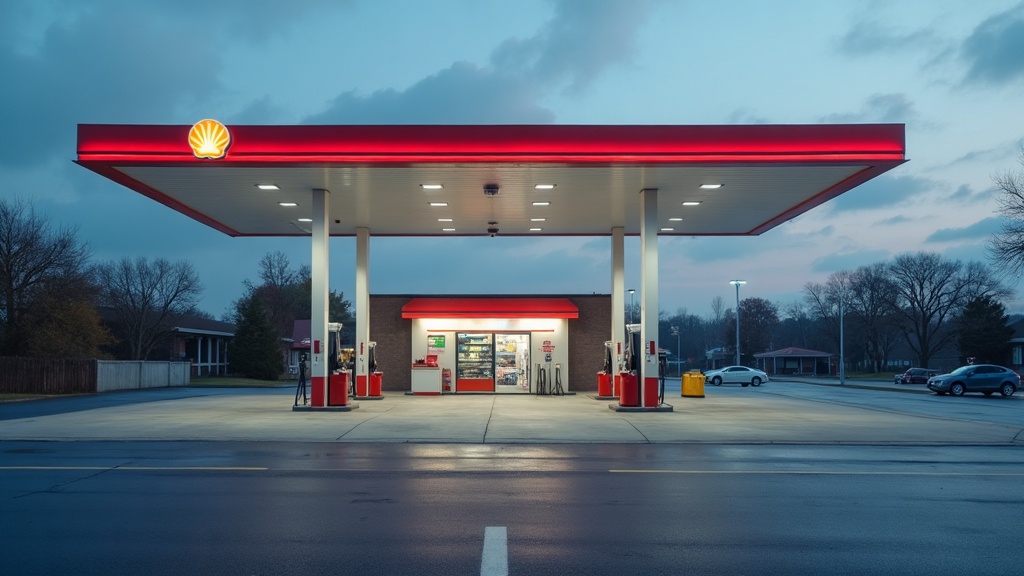
Finding a reliable gas station near me at the right price is a daily challenge for millions of American drivers. With fluctuating fuel costs and hundreds of thousands of stations to choose from, knowing how to locate the cheapest and most convenient option can save you significant money and time. This guide explores the tools, strategies, and industry insights that make finding fuel easier than ever.
Table of Contents
- The Landscape of Fuel Retail in 2025
- How to Find the Cheapest Gas Station Near You
- The Role of Technology in Fuel Shopping
- Factors That Influence Gas Prices
- Frequently Asked Questions
- Comparison of Fuel-Finding Methods
- Practical Tips for Saving on Fuel
Article Snapshot: Gas station near me searches are among the most common local intent queries in the U.S., with 46% of all Google searches having a local focus. This guide explains how to use modern tools, understand pricing dynamics, and adopt smart habits to consistently find affordable fuel wherever you drive.
Market Snapshot
- Average U.S. regular gasoline price in early March 2025: $3.37 per gallon (U.S. Energy Information Administration, 2025)[1]
- 72% of U.S. consumers use their smartphone to search for nearby gas stations while driving or traveling (GasBuddy, 2025)[2]
- 79% of U.S. drivers say price is the primary factor when choosing a gas station near them (GasBuddy, 2025)[2]
- Estimated 145,000 active retail gasoline stations in the United States (NACS, 2025)[3]
The Landscape of Fuel Retail in 2025
The American fuel retail market is vast and diverse. With an estimated 145,000 active retail gasoline stations across the country, drivers are never far from a place to fill up (NACS, 2025)[3]. However, not all stations are created equal. A significant 80% of these fuel stations are operated as convenience stores (NACS, 2025)[3], meaning the primary business is often selling snacks and drinks, with fuel acting as a loss leader or secondary profit center. This business model directly impacts pricing strategies.
The importance of local search has reshaped the industry. As Nikhil Naikal, Vice President of Maps at Google, noted, “We continue to see strong growth in local intent searches like ‘gas station near me,’ which are among the most common queries people make in Google Maps when they’re on the move” (Google, 2025)[4]. This shift means that a station’s digital visibility is now as critical as its physical location. Patrick De Haan, Head of Petroleum Analysis at GasBuddy, echoed this sentiment: “With more motorists hunting for a gas station near them on their phones, real-time station-level price data has become essential to how Americans decide where to fill up” (GasBuddy, 2025)[2].
For fuel retailers, this represents a fundamental change. Brian Norris, Senior Partner at McKinsey & Company, stated, “For fuel retailers, being the top result when consumers search ‘gas station near me’ is now as important as having a prime physical corner location” (McKinsey, 2025)[5]. This digital transformation has made it easier for consumers to compare prices, but it also means that stations must compete more aggressively on price and service to attract digitally savvy customers.
How to Find the Cheapest Gas Station Near You
Finding the cheapest gas station near me requires a combination of the right tools and a bit of local knowledge. The most effective method is using dedicated smartphone apps that aggregate real-time fuel prices from thousands of stations. Apps like GasBuddy and Waze allow users to filter by fuel grade, brand, and distance, showing the lowest prices in your immediate area. These platforms rely on user-reported data and station partnerships to keep information current.
Another powerful approach is using Google Maps. Simply typing “gas station near me” into the search bar will display a map with nearby stations, their current prices (where available), and user ratings. This method is particularly useful when you are in an unfamiliar area and need a quick, reliable option. Andrew Gross, a spokesperson for AAA National, highlighted this trend: “Drivers are increasingly relying on navigation apps and search terms like ‘gas station near me’ to find the cheapest fuel in unfamiliar areas” (AAA, 2025)[6].
Beyond apps, a classic but effective strategy is to look for stations in less trafficked areas or on the outskirts of town. Stations located near highway exits or in dense urban centers often have higher prices due to higher rent and taxes. Driving a few blocks off the main road can sometimes yield significant savings. Additionally, many grocery store chains and warehouse clubs like Costco and Sam’s Club offer discounted fuel to members, which can be a reliable way to save money on every fill-up.
The Role of Technology in Fuel Shopping
Technology has fundamentally changed how Americans shop for fuel. The statistic that 72% of U.S. consumers use their smartphone to search for nearby gas stations while driving or traveling (GasBuddy, 2025)[2] underscores the mobile-first nature of this behavior. This is further supported by the fact that 70% of Google Maps searches are made on mobile devices (Google, 2025)[4], meaning the majority of local fuel searches happen on the go.
This reliance on technology provides a huge advantage to the consumer. Devin Gladden, Manager of Federal Affairs at AAA, pointed out the tangible benefit: “In many metro areas, the difference between the most expensive and least expensive gas station near you can easily exceed 50 cents a gallon, which makes price-comparison tools especially valuable” (AAA, 2025)[7]. For a typical 15-gallon tank, a 50-cent difference translates to a $7.50 saving per fill-up. Over a year of weekly fill-ups, that adds up to nearly $400.
The technology is not just about finding the lowest price, however. Many apps now integrate features like payment, loyalty rewards, and even contactless pay-at-the-pump. This creates a seamless experience where you can find a station, pay for your fuel, and earn points all from your phone. For a deeper dive into how these digital tools are reshaping the retail landscape, you can read more about AI training for local search optimization on our site.
Factors That Influence Gas Prices
Understanding why gas prices vary is key to becoming a smarter shopper. Several factors influence the price you see at the pump. The most obvious is the global price of crude oil, which accounts for the majority of the cost. However, local competition is a huge driver. If there are multiple stations on one corner, prices are typically lower due to competition. Conversely, a station with no nearby competition can charge a premium.
Location and operating costs also play a major role. Urban stations often have higher prices due to expensive real estate, higher taxes, and increased overhead. Interestingly, the average difference in gasoline prices between urban and rural stations is $0.14 per gallon, with rural stations generally being cheaper (U.S. Energy Information Administration, 2025)[1]. The type of station matters too. Full-service stations, or those with large convenience stores and car washes, may have higher prices to cover their additional services and amenities.
Finally, regional factors like state taxes, environmental regulations, and proximity to refineries or pipelines can create significant price differences. For instance, states on the West Coast often have higher fuel taxes and stricter environmental standards, leading to higher prices than in the Gulf Coast region, where many refineries are located. Understanding these local dynamics can help you anticipate price changes and plan your fuel purchases more effectively. You can also find more information on understanding fuel pricing dynamics here.
Important Questions About Gas Station Near Me
What is the best app to find a cheap gas station near me?
The best app for finding cheap gas is typically GasBuddy, which has the largest user base for reporting real-time prices. Google Maps is also excellent because it is pre-installed on most phones and integrates seamlessly with navigation. Waze is another strong competitor, as it combines social navigation with fuel price data. The best choice often depends on your personal preference and which app has the most active users in your specific area.
How often do gas station prices change?
Gas station prices can change multiple times a day, especially in volatile markets or during periods of high demand. Many stations adjust their prices in the morning based on the overnight crude oil market and local competitor pricing. On a typical day, a station might change its price once or twice, but during a price war or a supply disruption, changes can be hourly. This is why using a real-time app is crucial for getting the best current price.
Is it worth driving out of my way to save money on gas?
Whether it is worth driving out of your way depends on the price difference and your car’s fuel efficiency. A good rule of thumb is to calculate the cost of the extra miles. If you drive 5 miles round-trip to save $0.20 per gallon on a 15-gallon tank, you save $3.00 but burn about 0.4 gallons of gas (assuming 25 mpg), which costs roughly $1.35. Your net saving is $1.65. If the price difference is large (e.g., $0.50/gallon) and the detour is short, it is usually worthwhile.
Why is the gas station on the highway exit more expensive?
Gas stations located at highway exits typically charge a premium for convenience and high visibility. They pay higher rent for prime real estate, and they cater to travelers who are often in a hurry and less price-sensitive. These stations also have higher operating costs due to longer hours and the need to accommodate large vehicles like RVs and trucks. For the best prices, it is often better to drive a few blocks away from the highway into a residential or commercial area.
Comparison of Fuel-Finding Methods
Choosing the right method to find a gas station near me depends on your priorities, such as speed, accuracy, and convenience. Below is a comparison of the most common approaches.
| Method | Pros | Cons | Best For |
|---|---|---|---|
| Dedicated Apps (GasBuddy, Waze) | Real-time prices, user reviews, loyalty rewards | Requires download, user-reported data can be delayed | Drivers who prioritize the absolute lowest price |
| Google Maps Search | Pre-installed, easy to use, integrates with navigation | Prices not always available for all stations | Quick search in an unfamiliar area |
| Membership Clubs (Costco, Sam’s Club) | Consistently low prices, reliable quality | Requires membership, long lines, limited locations | Drivers who are members and shop regularly |
| Local Knowledge / Driving Off-Main-Road | Free, can find hidden gems, no tech required | Time-consuming, inconsistent results | Drivers familiar with their local area |
Practical Tips for Saving on Fuel
Saving money on gas is about more than just finding the cheapest station. Adopting a few smart habits can significantly reduce your annual fuel costs. First, always use a price-comparison app before you fill up. The typical price spread between the lowest and highest priced gas stations within 5 miles in large U.S. metro areas is $0.50 per gallon or more (AAA, 2025)[7]. Taking 30 seconds to check your phone can save you several dollars.
Second, consider joining a fuel loyalty program. Many stations offer points or discounts for frequent purchases, and some grocery chains offer discounts of up to $0.25 per gallon when you use their loyalty card. Third, maintain your vehicle properly. Under-inflated tires, a dirty air filter, and aggressive driving can all reduce fuel economy by 10-20%, effectively making every gallon more expensive regardless of the pump price.
Finally, be strategic about when you fill up. Gas prices often rise on weekends and before holidays. Filling up on a Tuesday or Wednesday morning can sometimes yield a lower price. Also, avoid topping off your tank after the pump clicks off, as this can damage your vehicle’s vapor recovery system and waste fuel. By combining these strategies with a reliable app, you can consistently find the best gas station near me at the best price.
Wrapping Up
In 2025, finding a cheap and convenient gas station near me is easier than ever thanks to powerful mobile tools and a highly competitive retail landscape. By understanding the factors that influence pricing and using the right technology, you can save hundreds of dollars a year. Whether you are a daily commuter or a cross-country traveler, adopting a smart, app-driven approach to fuel shopping is the single best way to keep more money in your pocket. For more insights on how to optimize your daily routines with technology, explore more articles on superlewiss.
Useful Resources
- U.S. Energy Information Administration (EIA). Gasoline and Diesel Fuel Update.
https://www.eia.gov/petroleum/gasdiesel/ - GasBuddy. Spring Travel Survey Highlights How Drivers Shop for Fuel.
https://www.gasbuddy.com/go/spring-travel-survey-2025 - National Association of Convenience Stores (NACS). Industry Store Count.
https://www.convenience.org/Research/FactsFigures/IndustryStoreCount - Google. How AI Is Making Maps More Helpful for Everyday Decisions.
https://blog.google/products/maps/google-maps-ai-local-search-2025/ - McKinsey & Company. The Future of Fuel Retail: Competing in an On‑Demand, Digital-First World.
https://www.mckinsey.com/industries/oil-and-gas/our-insights/the-future-of-fuel-retail-2025 - AAA. What’s Driving Gas Prices This Winter.
https://newsroom.aaa.com/2025/02/whats-driving-gas-prices-winter-2025/ - AAA. Local Gas Price Gaps Highlight Need to Shop Around.
https://newsroom.aaa.com/2025/04/local-gas-price-gaps-2025/
For more about Golf courses near me, see Golf Courses Near Me.