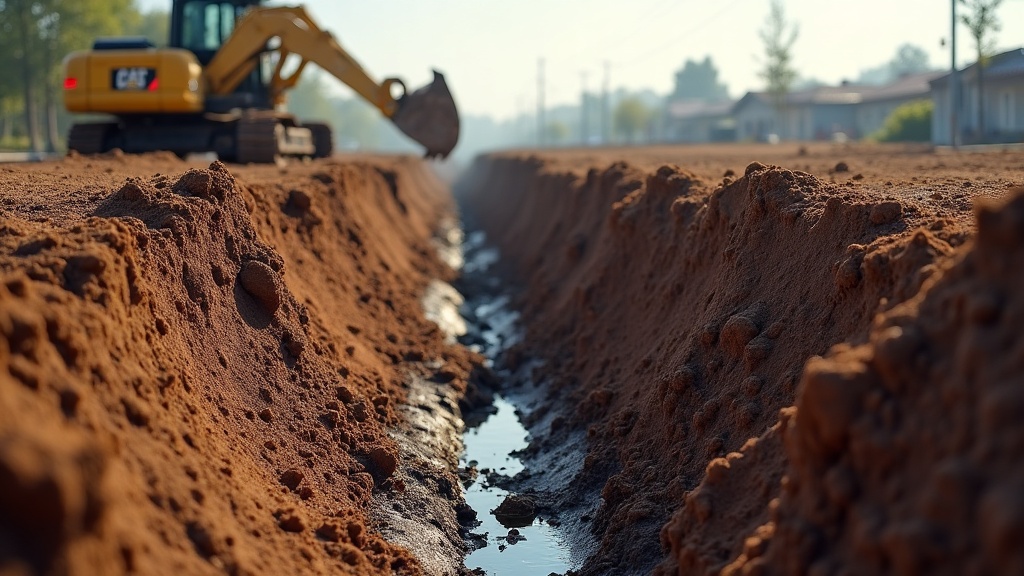
Learn how to backfill a trench correctly for long-term stability and safety. This guide covers compaction methods, material selection, and key techniques to prevent future settling and structural issues.
Table of Contents
- Summary Box
- Market Snapshot
- Introduction
- Understanding Trench Backfill Materials and Their Properties
- Step-by-Step Procedure to Backfill a Trench Correctly
- Compaction Standards and Testing for Trench Backfill
- Special Considerations for Mining and Heavy-Use Trench Backfill
- What People Are Asking
- Comparison of Trench Backfill Approaches
- Practical Tips for Reliable Trench Backfill
- Key Takeaways
- Further Reading
Key Takeaway: To backfill a trench correctly, always place soil in thin lifts of 4–6 inches, compact each layer to the required density, and use the right material for each zone. Proper compaction prevents future settlement and protects buried utilities.
Market Snapshot
- Typical trench backfill is placed in soil lifts of approximately six inches to ensure adequate compaction and minimize future settlement (Cat Rental Store, 2025)[1].
- Many construction guides recommend backfilling trenches in layers of four to six inches before compacting each layer (BigRentz, 2024)[2].
- Compaction requirements cited by civil engineers specify 95–100% of maximum dry density (ASTM D1557) for roadway and traffic areas and 90–95% for non‑traffic trench backfill zones (Jul Palampisi, 2024)[3].
Introduction
Whether you are installing a utility line, repairing a foundation, or working on a mining site, knowing how to backfill a trench properly is essential. Poorly executed backfill can lead to surface settling, pipe damage, and even dangerous cave-ins. This article covers the core principles of trench backfill, from material selection to compaction testing. We will also touch on how these methods apply to specialized fields like mining, where ground stability is critical. By the end, you will have a clear understanding of the steps needed to achieve a safe, durable result.
Understanding Trench Backfill Materials and Their Properties
Selecting the right material is the first step when you plan to backfill a trench. The material must be free of debris, organic matter, and large rocks that could damage pipes or create voids. For the pipe zone, a bedding layer of sand or gravel is typically placed 4 to 6 inches thick to provide a firm foundation (Excavation and Backfill Basics, 2025)[4]. Above the pipe, initial backfill of sand or gravel extends 6 to 12 inches, followed by final backfill with suitable excavated soil. The maximum particle size should not exceed 1.5 inches to ensure proper compaction and avoid damage to utilities (UpCodes, 2024)[5].
In mining applications, backfill materials often include cementitious grouts or controlled low-strength materials (CLSM) to provide additional structural support. These materials are designed to flow into place and harden without compaction, making them ideal for narrow or deep trenches where mechanical compaction is difficult. The choice between soil and grout-based backfill depends on the load-bearing requirements and the surrounding geology.
For general construction, granular soils such as sand, gravel, and crushed stone are preferred because they drain well and compact easily. Cohesive soils like clay can be used but require careful moisture control and more compaction effort. Always test the material’s moisture content before compaction; too dry or too wet will prevent achieving the required density.
Step-by-Step Procedure to Backfill a Trench Correctly
To backfill a trench correctly, follow a systematic process that ensures each layer is properly placed and compacted. The first step is preparation: remove all debris, water, and loose soil from the trench, inspect walls for stability, and install shoring or trench boxes where required to prevent cave-ins (MachinesL, 2025)[6]. Next, place a bedding layer of sand or gravel, typically 4 to 6 inches thick, and compact it lightly.
For the pipe zone, place the initial backfill material around the pipe in layers of 6 to 12 inches above the pipe, compacting each layer carefully to avoid shifting the pipe (Excavation and Backfill Basics, 2025)[4]. Above the pipe zone, continue placing backfill in lifts not exceeding 200–300 mm (approximately 8–12 inches) and achieve the required compaction – 95–100% of maximum dry density in roadway or traffic areas and 90–95% in non‑traffic areas (Jul Palampisi, 2024)[3].
For best results, place soil in six-inch layers, compact each layer before adding more, and repeat until the trench is filled (Cat Rental Store, 2025)[1]. Most backfilling methods will repeat the same four steps until the backfill reaches grade level: backfill in layers of four to six inches, compact each layer with your chosen equipment, and finish by watering down your backfill (BigRentz, 2024)[2].
Compaction Standards and Testing for Trench Backfill
Compaction is the most critical factor when you backfill a trench. Without adequate compaction, the backfill will settle over time, creating depressions that can damage pavement or foundations. The standard measure of compaction is the percentage of maximum dry density (MDD) as determined by the Proctor test (ASTM D1557). For traffic areas, compaction must reach 95–100% of MDD; for non-traffic areas, 90–95% is acceptable (Jul Palampisi, 2024)[3].
Testing is typically done using nuclear density gauges or sand cone tests. On large projects, field density tests are performed every 500–1,000 square feet of compacted area or at the discretion of the engineer. In mining environments, where ground stability is paramount, compaction may be verified by plate load tests or by monitoring settlement over time. The use of advanced backfill grouting techniques in mining ensures that voids are filled completely, eliminating the need for mechanical compaction in some cases.
Moisture content must be within a specified range (usually within 2% of the optimum moisture content) to achieve the required density. If the soil is too dry, add water and mix thoroughly; if too wet, aerate the soil by spreading it out and allowing it to dry. Never compact wet soil – it will not achieve the required density and may lead to future failure.
Special Considerations for Mining and Heavy-Use Trench Backfill
In mining and heavy industrial applications, the stakes are higher when you backfill a trench. The backfill must not only support surface loads but also resist ground movement and water ingress. Cementitious backfill grouts are often used because they provide high strength and can be pumped into place in deep or confined trenches. These grouts are designed to fill every void, preventing subsidence and protecting underground infrastructure.
For example, in mining operations, trenches for pipelines or cable conduits are often backfilled with a flowable fill that achieves a compressive strength of 50–150 psi. This material is self-leveling and does not require compaction, making it ideal for areas where access is limited. The same principle of precision applies: every detail must be controlled to ensure the final product meets specifications.
Safety is also heightened in mining environments. Before backfilling, ensure that all utilities are properly bedded and protected. Use a layer of sand or gravel at least 6 inches above the pipe to shield it from sharp rocks (Backfilling my sewer trench, 2025)[7]. In traffic areas, the final layer of backfill should be compacted to 100% of MDD to prevent any future settlement that could create a safety hazard.
What People Are Asking
What is the best material to backfill a trench?
The best material depends on the location of the trench. For the pipe zone, sand or gravel is preferred because it provides a stable bedding and allows for drainage. For the main backfill, granular soils such as sand, crushed stone, or gravel are ideal because they compact easily and resist settling. Cohesive soils like clay can be used but require careful moisture control and more compaction effort. In mining applications, cementitious grouts or flowable fill are often used for their strength and ease of placement.
How thick should each layer be when backfilling a trench?
For most applications, each layer (or lift) should be 4 to 6 inches thick before compaction. In the pipe zone, initial backfill is placed 6 to 12 inches above the pipe. Above the pipe zone, lifts should not exceed 200–300 mm (approximately 8–12 inches) to ensure proper compaction. On government contracts, some specifications require lifts no more than 150 mm deep. Always follow the project specifications and compact each layer thoroughly before adding the next.
What compaction level is required for trench backfill?
Compaction requirements vary by location. For roadway and traffic areas, backfill must be compacted to 95–100% of maximum dry density (MDD) as determined by ASTM D1557. For non-traffic areas such as lawns or gardens, 90–95% of MDD is typically sufficient. In mining or heavy-use areas, compaction may need to reach 100% MDD in the final meter of backfill. Always test the compaction using a nuclear density gauge or sand cone test to verify compliance.
How do you prevent a trench backfill from settling?
To prevent settling, place backfill in thin lifts (4–6 inches) and compact each layer thoroughly. Use a vibratory plate compactor, jumping jack, or roller depending on the trench width and soil type. Ensure the soil moisture content is within the optimum range for compaction. For the pipe zone, use sand or gravel to provide a stable base. In mining applications, consider using a flowable fill or cementitious grout that self-compacts and eliminates voids. Finally, water down the final layer to help it settle and then top off with additional soil as needed.
Comparison of Trench Backfill Approaches
Different projects require different backfill methods. The table below compares three common approaches: traditional soil backfill, flowable fill (CLSM), and cementitious grout. Each has its own advantages in terms of cost, compaction requirements, and application.
| Method | Material | Compaction Required | Best For |
|---|---|---|---|
| Traditional Soil Backfill | Granular soil (sand, gravel, crushed stone) | Yes, in lifts of 4-6 inches | General construction, utility lines, residential work |
| Flowable Fill (CLSM) | Low-strength cementitious mix | None (self-leveling) | Narrow trenches, areas with limited access, mining |
| Cementitious Grout | High-strength cement slurry | None (pumped into place) | Mining, deep trenches, void filling |
For most projects, traditional soil backfill is the most cost-effective option. However, when compaction is difficult or when high strength is required, flowable fill or cementitious grout may be the better choice.
Practical Tips for Reliable Trench Backfill
Here are actionable tips to ensure your trench backfill is done right the first time:
- Prepare the trench properly: Remove all debris, water, and loose soil before starting. Inspect trench walls for stability and install shoring if needed.
- Use the right material for each zone: Bedding layer: 4-6 inches of sand or gravel. Pipe zone: sand or gravel 6-12 inches above the pipe. Main backfill: granular soil with particle size under 1.5 inches.
- Compact in thin lifts: Never place more than 6 inches of loose soil before compacting. Use a plate compactor or jumping jack for best results.
- Test compaction regularly: Use a nuclear density gauge or sand cone test to verify that each lift meets the required density (95-100% MDD for traffic areas).
- Water the final layer: After the final lift, water the backfill to help it settle, then top off with additional soil as needed.
- Keep equipment fueled: Ensure heavy machinery has a full tank to avoid delays during compaction work.
Key Takeaways
Knowing how to backfill a trench correctly is essential for the longevity and safety of any construction project. By selecting the right materials, placing backfill in thin lifts, and compacting each layer to the required density, you can prevent future settling and protect buried utilities. For specialized applications like mining, consider using cementitious grouts or flowable fill to achieve the necessary stability. For a deeper dive into advanced methods, explore our guide on backfill grouting techniques to see how these principles apply to industrial and mining environments.
Further Reading
- Trench Backfilling Tips for Safety and Efficiency. Cat Rental Store (Caterpillar).
https://rent.cat.com/en_US/blog/tips-backfilling-trenches.html - 4-Step Guide to Backfilling Trenches and Foundations. BigRentz.
https://www.bigrentz.com/blog/backfill-trench - Proper Construction Procedures for Backfilling Activity. Jul Palampisi (LinkedIn).
https://www.linkedin.com/posts/jul-palampisi-405b93a3_proper-construction-procedures-for-backfilling-activity-7418295483330220032-onah - Excavation and Backfill Basics. YouTube.
https://www.youtube.com/watch?v=Ykw12bfeWV8 - Trenching, Bedding, Tunneling and Backfilling. UpCodes.
https://up.codes/s/trenching-bedding-tunneling-and-backfilling - Trench Backfill: Best Methods & Materials, Ultimate Guide. MachinesL.
https://www.machinesl.com/trench-backfill/ - Backfilling my sewer trench. YouTube.
https://www.youtube.com/watch?v=WlC-o4y-Www